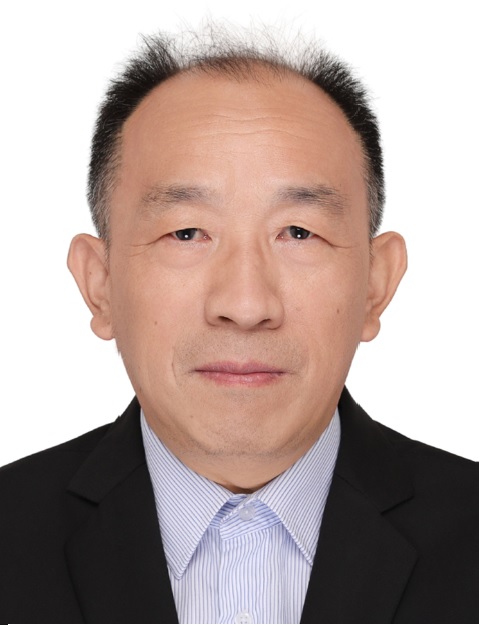
段春迎 教授
Prof. Chunying Duan
办公室:仙林化学楼D411
邮 箱: duancy@nju.edu.cn
2022-present Professor, Nanjing University
2006-2022 Professor, Dalian University of Technology
1992-2006 Lecturer, Associate Professor, Professor, Nanjing University
1989-1992 Doctor degree, Nanjing University
1986-1989 Master degree, Jilin University
1982-1986 Bachelor degree, Jilin University
段春迎 博士生导师、长江学者特聘教授、国家重点研发计划首席科学家。1986年、1989年吉林大学先后获学士与硕士学位,1992年南京大学获博士学位并留校任教。曾在香港中文大学和英国诺丁汉大学做访问学者。2010年获国家杰出青年基金资助。主要从事功能配位化学研究,研究内容聚焦于金属-有机限域空间的可控组装、仿生识别与不对称催化等。近年来,承担国家自然科学基金委员会重大、重点项目和国际合作重点项目以及科技部“973”子课题项目。在J. Am. Chem. Soc., Angew. Chem. Int. Ed., Nature Commun.等国际高水平刊物上发表SCI论文400余篇,论文被他引20000余次。获得国家自然科学二等奖 1 项,省部级一等奖 4 项。
Construction of Photoactive Coordination Supramolecular Systems and Control of Electron-Transfer Processes
The regulation of electron-transfer processes under visible-light excitation and the effective separation of photogenerated electron–hole pairs are central to the control of photochemical reactions. Conventional intramolecular and intermolecular approaches are often constrained by the inherent trade-off between accelerating photoinduced charge transport and stabilizing the resulting charge-separated states. To address this challenge, Professor Duan employs cage- and ring-shaped supramolecular scaffolds that provide unique structural confinement. Through dye coupling and encapsulation strategies, he achieves the controlled assembly of photoactive metal–organic confined systems. The confined microenvironment not only shields against competing electron- and energy-transfer pathways but also promotes highly efficient, selective photoinduced intramolecular excimer-like electron transfer, thereby significantly enhancing both the rate of light-driven charge transfer and the efficiency of charge separation.
Controlled Assembly of Multifunctional Metal–Organic Confined Systems and Kinetic Synergy in Tandem Reactions
Achieving effective synergy among multiple independent catalytic events is a critical challenge in the conversion of basic feedstocks to value-added fine chemicals through multistep reactions. Key factors include the structural integration of distinct catalytic sites within a composite material, the kinetic matching of individual reaction steps, and the rapid diffusion of species with varying hydrophilic/hydrophobic properties within the reaction medium. Capitalizing on the structural programmability of metal–organic confined systems, Professor Duan couples CO₂ adsorption sites with epoxide activation centers within the confined nanospace. Through the structural alignment of active sites responsible for CO₂ capture, olefin oxidation, and stereoselective catalysis, along with the sharing of reaction intermediates, he achieves the one-pot conversion of CO₂ and olefins into high-value chiral carbonates. This approach demonstrates a powerful strategy for integrating multistep transformations in a single reaction vessel, with significant implications for sustainable fine-chemical synthesis.

Inert C(sp3)–H Bond Activation and Multiphoton Synergistic Catalysis
To address the key challenges of high bond dissociation energy, difficult activation, and poor selectivity associated with inert C(sp3)–H bonds, the applicant's team has carried out systematic research centered on “enzyme-mimetic active site construction—multiphoton energy accumulation—precise radical generation—confined microenvironment regulation.” We have developed a series of photocatalytic activation systems based on coordination polymers, metal–organic frameworks (MOFs), and metal–organic cages, progressively establishing the original research direction of “multiphoton synergistic catalysis for inert bond activation.”
1. Ao Li, Junkai Cai,* Quan Xiao, Mingyu Yang, Tianqiong Ma,* and Chunying Duan*. Efficient Light-Driven CO2 Capture and Reversible Release Enabled by Metastable Photoacid-Decorated Metal−Organic Frameworks, J. Am. Chem. Soc., 2026, 148, 28019−28024.
2. Xin Xu, Junkai Cai,* Qiaojia Guo, Peng Wang, and Chunying Duan,* Merging bioinspired incubation with supramolecular photocatalysis for Michaelis CO2 reduction beyond enzymes, Nat. Commun., 2026, 17, 7336.
3. Zhong Wei, Xu Jing,* Junkai Cai, Zhixin Wang, Guowei Geng, Song Zhao, and Chunying Duan*, Programmable Helicity and Spin Polarization in Pt6L4 Coordination Capsules through Guest-Mediated Chiral Control, J. Am. Chem. Soc., 2026, 148, 30682–30688..
4. Baotong Ding, Junkai Cai,* Peng Wang, Shaojie Guo, and Chunying Duan,* Modifying Surfactants within Divergent Pores of Cluster-based Metal-organic Frameworks for Syngas Electrosynthesis, Angew. Chem. Int. Ed., 2026, 65, e3694976.
5. Yu Zhang, Liang Zhao,* Jianwei Wei, Cheng He, Huali Wang, Chunying Duan,* A Host–Guest Supramolecular Approach to Boosting Consecutive Multi-Photon Excitation for the Arylation of Inert C(sp3)─H Bonds, Angew. Chem. Int. Ed., 2026, 65, e8289757.
