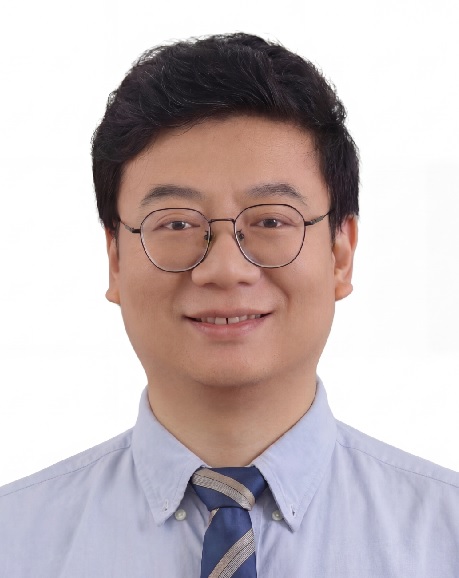
魏 炜 教授
Prof. Wei Wei
邮 箱:weiwei@nju.edu.cn
电 话:0086-025-89681305
2025- Professor, Nanjing University
2018- 2025 Associate Professor, Nanjing University
2011-2018 Research Assistant, Nanjing University
2010-2011 Visiting Scholar, Peking University
2009-2011 Post-doctoral Research Fellow, Nanjing University
2004-2009 PhD Student, Nanjing Normal University
魏炜 教授、博士生导师。2004-2009年在南京师范大学学习并获得博士学位。随后进入南京大学从事博士后研究工作,并在北京大学开展访问学者研究工作,研究方向为金属蛋白的结构功能和仿生应用。2011年加入南京大学生命科学学院,先后担任助理研究员、副研究员、副教授,2019年起获评博士生导师,并于2023年晋升为正教授。主要研究领域为生物无机化学,研究方向包括:生物无机杂化催化体系构建、多聚磷酸盐的化学生物学功能、无机纳米材料的生物学效应等。
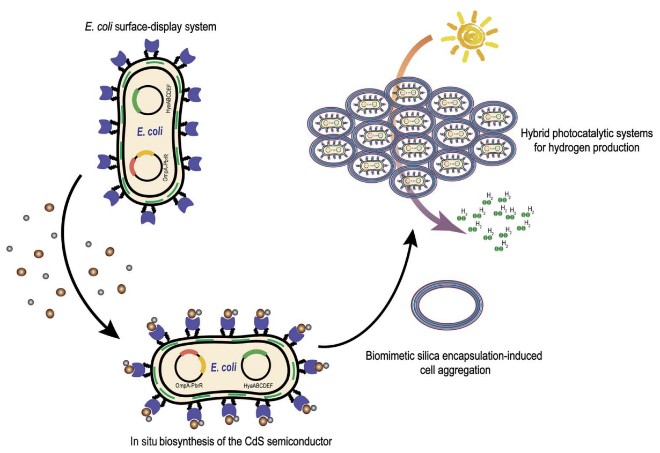
Bio-inorganic hybrid catalysis
When metal ions interact with biomolecules, they can form unique coordination structures and multifunctional metal clusters. Combining the biological functions of metal complexes with artificially modified metal enzymes. We have developed a series of biocompatible bio inorganic hybrid catalytic systems by understanding the mechanism of interactions between metals and biomolecules.
Chemical and biological functions mediated by polyphosphates
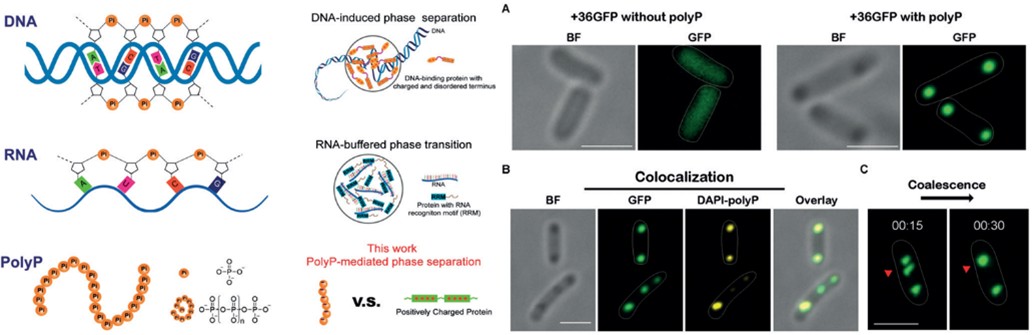
Bioinorganic macromolecular polyphosphate (PolyP) is widely present in various cells from prokaryotic to eukaryotic systems. We found that PolyP mediated protein phase separation and post-translational modification are likely key molecular mechanisms involved in regulating important physiological and biochemical functions in organisms, especially in higher mammalian cells. This will provide a theoretical basis and new ideas for the study of the chemical and biological functions of polyphosphates.
Biological effects of two-dimensional inorganic nanomaterials
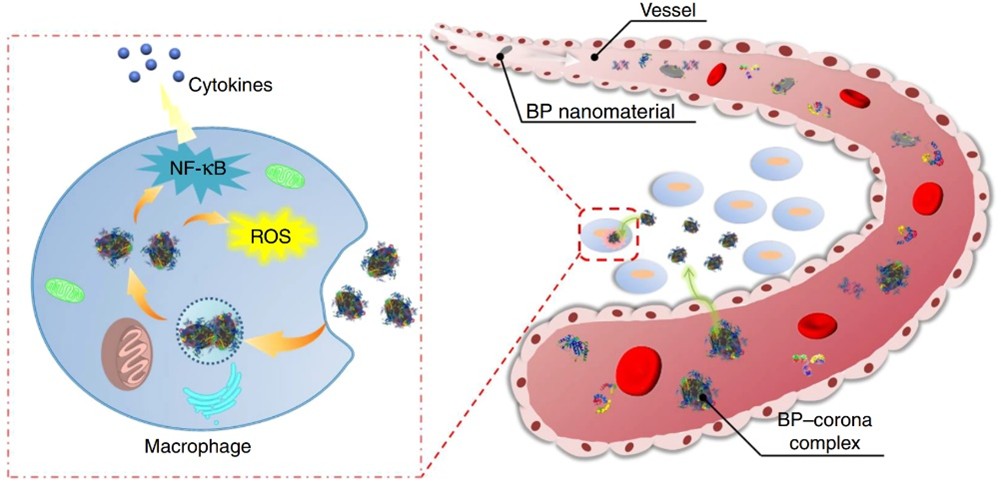
Single element two-dimensional inorganic nanomaterials have potential biological application value. By combining chemical biology tools and multidimensional omics techniques, we investigated the interactions between black phosphorus, arsenite, and proteins in biological systems, providing important references for revealing the biological effects of these two-dimensional inorganic nanomaterials in vivo.
1. Ji, L.; Zhu, T.; Jiang, T.; Wang, L.; Qiu, Z.; Gao, S.; Wang, Y.; Wang, J.; Zhang, J.; Huang, H.; Mao, Y.; Lin, C.; Zhao, J.*; Wang, X.*; Wei, W.*, A live biohybrid bacterial therapy based on engineered Serratia marcescens. Nat. Commun. 2026, 17:4956
2. Zhu, L.; Wen, Z.; Yu, M.; Zhang, J.; Qin, Y.; Gao, S.; Mao, Y.; Deng, Y.; Tian, T.; Liu, S.; Jiang, W.; Ma, J.; Wang, X.; Guo, Z.; Wei, W.*; Zhao, J.*; Wang, X.*, Chirality-Driven Immune Checkpoint Modulation by Chiral Iridium(III) Nanoparticles. J. Am. Chem. Soc. 2026, 148 (17), 17794-17810.
3. Wang, J.; Zhao, X.; Tao, Y.; Wang, X.; Yan, L.; Yu, K.; Hsu, Y.; Chen, Y. *; Zhao, J.*; Huang, Y. *; Wei, W. *, Biocompatible aggregation-induced emission active polyphosphate-manganese nanosheets with glutamine synthetase-like activity in excitotoxic nerve cells. Nat. Commun. 2024, 15 (1), 3534.
4. Sun, P. Q.; Li, K. L.; Liu, X.; Wang, J.; Qiu, X. S.*; Wei, W. *; Zhao, J. *, Peptide-mediated Aqueous Synthesis of NIR-II Emitting Ag2S Quantum Dots for Rapid Photocatalytic Bacteria Disinfection. Angew. Chem. Int. Ed., 2023, 62 (14).
5. Mo, J. B.; Xu, Y.; Zhu, L. Q.; Wei, W.*; Zhao, J.*, A Cysteine-Mediated Synthesis of Red Phosphorus Nanosheets, Angew. Chem. Int. Ed., 2021, 60(22): 12524-12531
