
鲍松松 副教授
Associate Prof. SongSong Bao
办公室:仙林化学楼C303
邮 箱:baososo@nju.edu.cn
2016.09-present Associate Professor, Department of Chemistry, Nanjing University
2014.01-2016.08 Research Associate in Department of Chemistry, Nanjing University
2012.01-2013.12 Research Assistant in Department of Chemistry, Nanjing University
2010.03-2011.12 Postdoctoral Fellow in Department of Material, Nanjing University
2008.09-2010.01 Postdoctoral Fellow in Department of Inorganic and Analytical Chemistry, University Frankfurt
2002.09-2008.08 Ph.D. in Inorganic Chemistry, Nanjing University
1998.09-2002.06 B. S. in Chemistry, Nanjing University
鲍松松,副教授、硕士生导师。2002和2008年分别获南京大学化学专业学士和无机化学博士学位。2008-2010年,德国法兰克福大学博士后;2010-2011年,南京大学材料系博士后。2012-2016,南京大学化学化工学院助理研究员、副研究员;2016年至今,南京大学化学化工学院副教授。主要研究方向:质子导电金属有机膦酸材料和MOFs材料动态结构的表征。
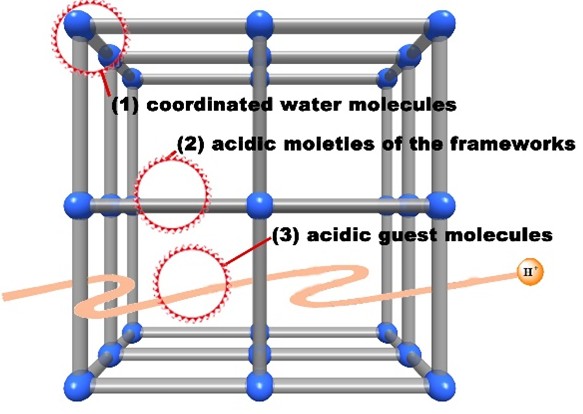
Proton Conductive Metal Phosphonates
Proton Exchange Membrane (PEM) is a crucial component of fuel cells. High proton conductivity and stability are two important factors in evaluating a PEM. Traditional organic or inorganic proton-conducting materials have shortcomings in thermal stability, chemical durability, and proton conductivity. Hence, developing new types of proton-conducting materials is one of the most essential issues in fuel cell technology. We expect to achieve a series of novel proton-conducting materials based on metal phosphonates. Due to the crystallinity and highly tunable nature of metal phosphonates, they are an excellent platform for developing structure–proton conduction relationships. Furthermore, investigating the proton conduction of single crystal samples along different directions can give useful information for understanding proton dynamics and the mechanisms of proton conduction.
Characterizing the dynamic structure of MOFs materials
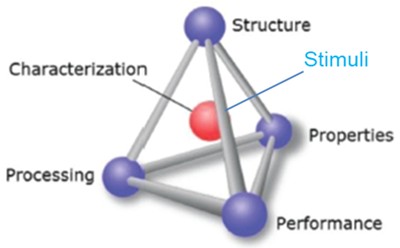
The dynamic structure of MOFs refers to the flexibility and responsiveness of these materials to various stimuli, such as temperature, pressure, or guest molecules. Characterizing the dynamic structure of MOFs is crucial for understanding their properties and potential applications. By combining single-crystal diffraction, powder diffraction, X-ray absorption spectroscopy, and corresponding in situ testing techniques, we expect to gain a comprehensive understanding of how the material’s structure changes dynamically under various external stimuli, which is essential for understanding its properties and optimizing its performance in specific applications.
1. Synergistic Regulation of Magnetic and Luminescent Properties in Anthracene-Bridged Dinuclear Dysprosium Complexes through Intramolecular Photodimerization. Liao-Yuan Wu, Qian-Qian Su, Guo-Bin Sun, Xin-Da Huang, Song-Song Bao*, Li-Min Zheng*, Cryst. Growth Des. 2025, 25: 5231−5240.
2. Photoresponsive lanthanide-dianthracene framework: Introduction of photoactive anthracene pairs by controlling the synthesis temperature. Ran Gao, Qian Zou, Qian-Qian Su, Xiu-Fang Ma, Ye-Hui Qin, Rui Liao, Song-Song Bao*, Li-Min Zheng*, Chin. Chem. Lett., 2025, 36: 110404.
3. Cu12-cluster-based metal–organic framework as a metastable intermediate in the formation of a layered copper phosphonate. Qian Teng, Ran Gao, Song-Song Bao*, Li-Min Zheng*, Chem. Commun. 2024, 60: 7765−7768.
4. Design and Crystallization of Water-Stable Uranyl Phosphonates Using a Metalloligand Strategy, Sheng-Bo Liu, Song-Song Bao, Li-Min Zheng, Cryst. Growth Des. 2024, 24: 8429−8438.
5. X-Ray Triggered Coordination-Bond Breakage in Dysprosium-Organic Framework and its Impact on Magnetic Properties. Qian Zou, Guo-Lu Wang, Yi-Qing Chen, Xin-Da Huang, Ge Hua Wen, Ming-Feng Qin, Song-Song Bao*, Yi-Quan Zhang*, Li-Min Zheng*, Chem. Eur. J. 2023, 29: e202203454.
