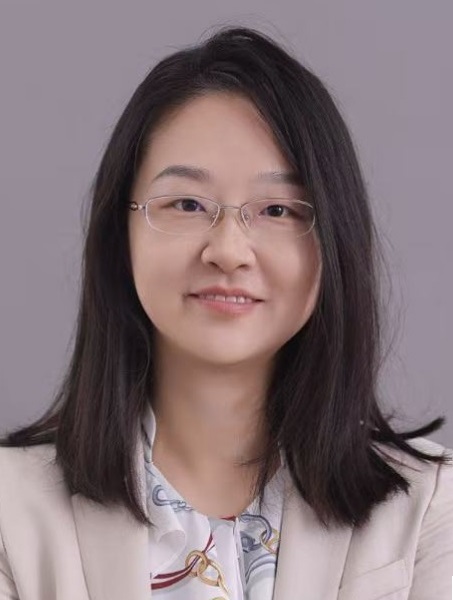
鲁 艺 教授
Prof. Yi Lu
办公室: 化学楼E401
邮 箱: luyi@nju.edu.cn
Jan, 2020 – Nanjing University, Professor
Aug, 2015 – Dec, 2019 Nanjing University, Associate Professor
Jul, 2014 – Jul, 2015 Nanjing University, Associate Researcher
Jul, 2011 – Jun, 2014 Nanjing University, Assistant Researcher
Sep, 2006 – Jun, 2011 Nanjing University, PhD Candidate in Chemistry
Oct, 2008 – Aug, 2010 The Scripps Research Institute, Visiting Student
Sep, 2002 – Jun, 2006 Nanjing University, Bachelor Candidate in Chemistry
鲁艺 教授、博士生导师。2011年于南京大学化学化工学院获博士学位,期间参加CSC联合培养博士项目赴美国The Scripps Research Institute联合培养两年。2015年获聘南京大学化学化工学院副教授,2018年参加CSC青年骨干教师出国研修项目赴美国Scripps Research访学一年,2020年获聘南京大学化学化工学院教授。在JACS, Angew, Nat.Commun.等国内外期刊发表文章60余篇。目前研究方向包括:金属有机催化偶联反应为基础的药物分子的合成;高效绿色可回收催化体系的构建与催化应用。
Transition-metal-catalyzed cross-coupling in drug discovery
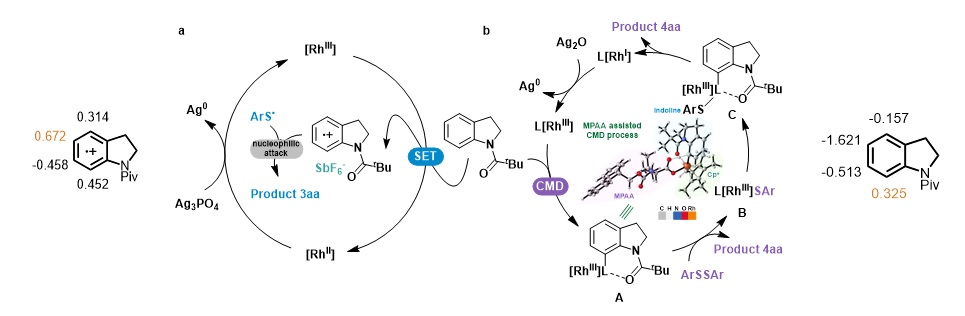
The distinctive outer-electron arrangements of transition metals endow them with the versatility to activate substrates through both the two-electron CMD pathway and the single-electron SET mechanism, allowing tunable site selectivity under different conditions. In parallel, we exploit ligand modification to boost the intrinsic reactivity of the catalytic center and to stabilize transient intermediates, ultimately establishing a highly selective and highly active catalytic platform.
Recyclable catalytic system for pharmaceutical application
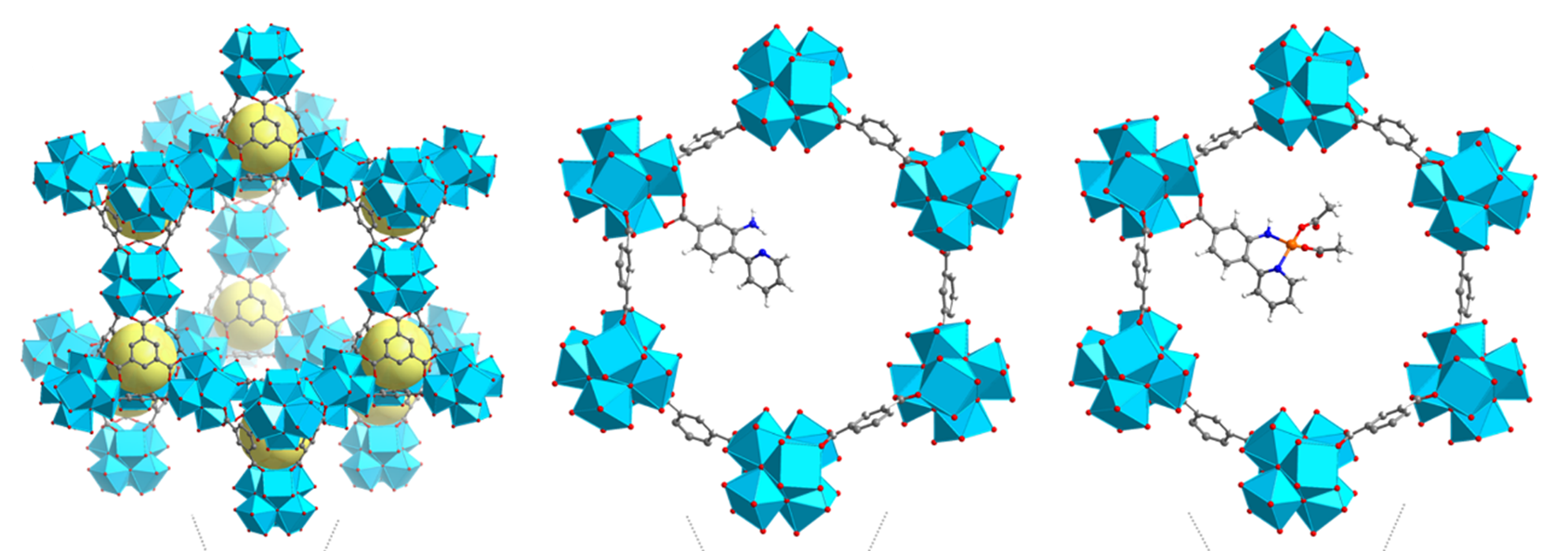
Homogeneous transition-metal catalysts are persistently plagued by issues such as poor recyclability, high costs, and environmental pollution. Moreover, residual metal contaminants in final products severely limit their applicability in the synthesis of pharmaceutical intermediates. There is therefore an urgent need to develop appropriate heterogeneous catalysts that not only address these challenges but also uphold ecological integrity and advance the principles of green chemistry. The rationally designed ligand can stabilize the catalytic center, suppressing metal leaching and particle agglomeration, and simultaneously boost catalytic activity. This strategy offers a promising new avenue for extending catalyst lifetime and robustness, thereby underscoring its considerable potential for industrial pharmaceutical applications.
(1) Qin, X.; Xie, C.-F.; Zhao, T.-F.; Liu, Z.-Y.; Qin, Y.-X.; Zhao, Y.-X.; Liang, Y.; Sun, W.-Y.; Yu, J.-Q.; Lu, Y. Precise Editing of Indolines at Different Positions via SET and CMD Pathways. JACS Au 2026, 6, 2455–2463.
(2) Liu, Y.-Y.; Zhao, Y.-X.; Chen, J.-Q.; Qin, X.; Sun, W.-Y.; Lu, Y. Transient Directing Group-Enabled Palladium-Catalyzed Axially Chiral C–H Alkynylation. Organic Letters 2026, 28, 6690–6695.
(3) Li, Z.-C.; Lin, Z.-Y.; Zou, Y.-H.; Pan, Y.-N.; Yuan, C.-K.; Lu, Y. High-Efficient Photocatalytic Synthesis of Tetrahydroquinolines Featuring Cu/Zr Metal–Organic Frameworks. ACS Applied Materials & Interfaces 2026, 18, 11370–11378.
(4) Xu, X.; Wang, N.; Zou, Y.; Qin, X.; Wang, P.; Lu, X.; Zhang, X.; Sun, W.; Lu, Y. N, N'-bidentate ligand anchored palladium catalysts on MOFs for efficient Heck reaction. Nature Communications 2024, 15.
