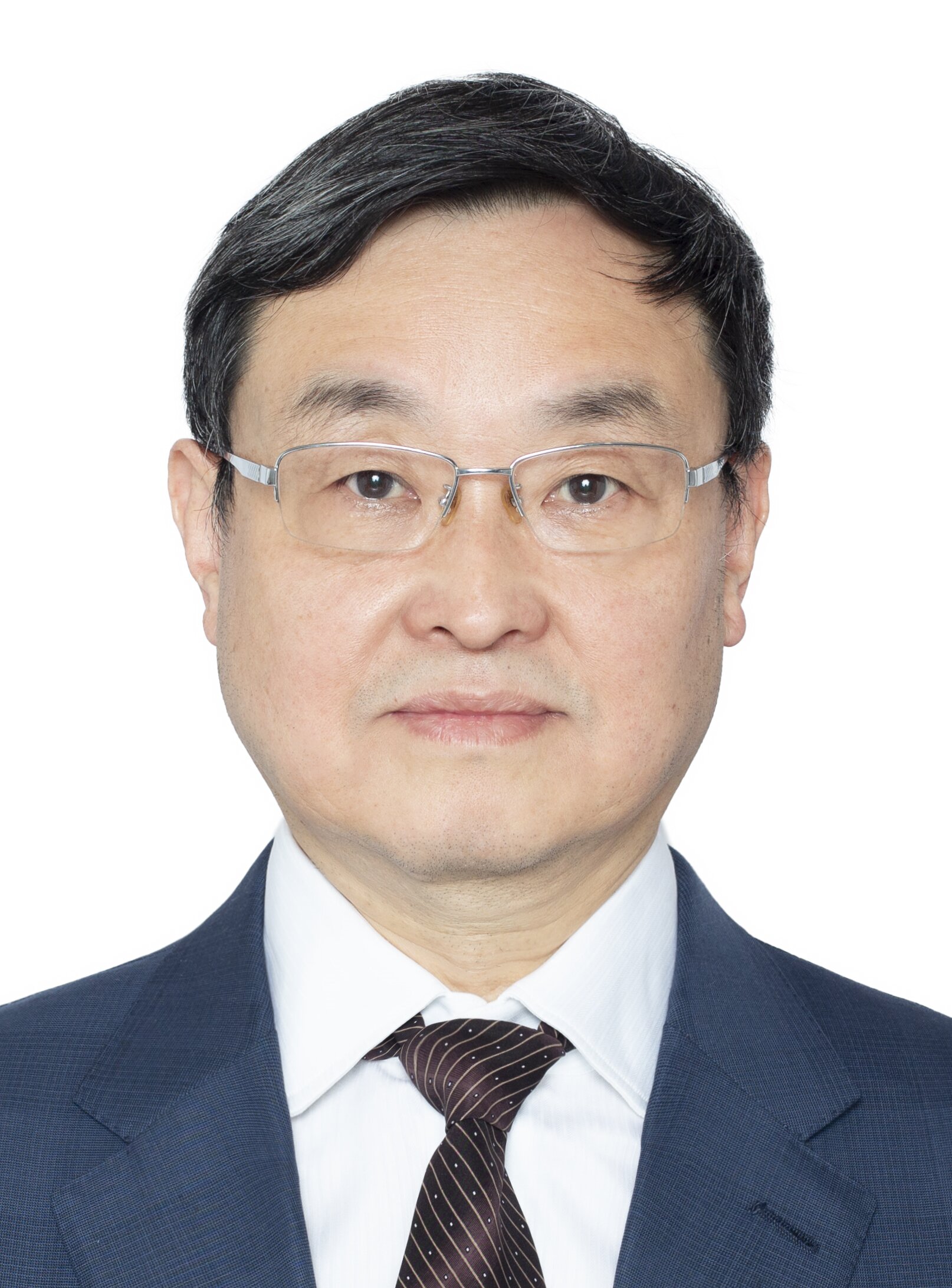
郭子建 院士
Prof. Zijian Guo
1999-present Professor, Nanjing University
1996-1999 Assistant Researcher, University of Edinburgh, UK
1996-1996 Visiting Scholar, University of British Columbia, Canada
1994-1996 Post-doctoral Fellow, University of London, UK
1989-1994 Ph.D., University of Padua, Italy
郭子建,中国科学院院士,发展中国家科学院院士,南京大学教授,南京大学学术委员会主任,南京大学化学和生物医药创新研究院院长。长期从事化学生物学交叉领域研究,在生物传感与成像、抗肿瘤金属配合物、金属免疫等方面取得了系列研究成果,在Nat. Biomed. Eng.,J. Am. Chem. Soc.,Angew. Chem. Int. Ed.,Sci. Adv.,Nat. Commun.,Natl. Sci. Rev.,Chem. Rev.,Chem. Soc. Rev.等期刊发表科研论文300余篇,被引用约2万次,H指数70。主持国家自然科学基金创新群体、重大研究计划、重大项目以及科技部973项目等。荣获全国模范教师、教育部自然科学一等奖、亚洲生物无机化学学会杰出成就奖、意大利化学会Luigi Sacconi奖,带领团队入选全国高校黄大年式教师团队。担任美国化学会Chemical & Biomedical Imaging期刊主编、爱思唯尔Coord. Chem. Rev.期刊副主编,中国化学会《无机化学学报》主编等。
Fluorescent Probes for Biological Species and Microenvironments
The biological system in organisms including biological species (Zn2+, Fe2+/Fe3+, Cu+/Cu2+, ROS, reactive sulfur, etc.) and cellular microenvironments (pH, oxygen level, viscosity) etc. plays a vital role in various physiological processes. It is of great significance to reveal the different physiological and pathological functions of these important biological species and microenvironments. Therefore, real time detection and tracking of these biological species and microenvironments have become an important research topic. The development of fluorescence imaging stimulated the search for fluorescent probes, which are widely used in biochemistry and medical science as power tools for monitoring molecular interactions.
Platinum Complexes for Biomedical Applications
Platinum complexes are well-known for their antitumor activities. Up to now, thousands of platinum complexes have been prepared and tested as potential anticancer agents. Among them, cisplatin, carboplatin, and oxaliplatin have entered clinical application globally, and nedaplatin, lobaplatin, and heptaplatin have evolved into clinical drugs regionally. Ideally, platinum drugs should kill cancerous cells exclusively without harming the normal ones. Practically, however, the tumor selectivity of platinum drugs is quite poor. Thus, systemic toxicity and drug resistance become the major defects of platinum drugs. In recent years, a keen interest in functionalizing platinum complexes with bioactive molecules, targeting groups, photosensitizers, fluorophores, or nanomaterials has been sparked among chemical and biomedical researchers.
Metal-mediated Immune Regulation and Interventions
Metals are essential components in living systems. Metal ions as well as metalloproteins play an important role in almost all life processes, including materials storage and transportation, energy conversion and transfer, signal transduction and regulation, and molecules synthesis and degradation. Metals are also key players in immune system, especially the regulation of immune response, and misregulation of metals often cause a broad range of diseases. In recent years, cancer immunotherapy has shown significant promise and made people see the hope of curing cancer. The important role of metal elements in immune response and cancer therapy is gradually receiving attention.

1. Radiotherapy-triggered reduction of platinum-based chemotherapeutic prodrugs in tumours, Qunfeng Fu; Shuren Zhang,; Siyong Shen; Zhi Gu; Junyi Chen; Dongfan Song; Pengwei Sun; Chunhong Wang; Zhibin Guo; Yunlong Xiao; Yi Qin Gao; Zijian Guo*; Zhibo Liu*, Nat. Biomed. Eng., 2024, 8, 1425-1435.
2. Combining cisplatin and a STING agonist into one molecule for metalloimmunotherapy of cancer, Shuren Zhang; Dongfan Song; Wenhao Yu; Ji Li; Xiaoyu Wang; Yachao Li; Zihan Zhao; Qi Xue; Jing Zhao; Jie P. Li*; Zijian Guo*, Natl. Sci. Rev., 2024, 11, nwae020.
3. Pt-seq unveils the genomic binding pattern of platinum-based drugs, Chuyun Shao; Mingyang Li; Liuyi Liu; Dongsheng Bai; Jinmin Yang; Cong Liu; Linxiang Cai; Xiaoyong Wang; Jinying Peng; Zijian Guo*; Chengqi Yi*, Sci. Adv., 2025, 11, eadx6809.
4. Click chemistry-based force spectroscopy revealed enhanced binding dynamics of phosphorylated HMGB1 to cisplatin-DNA, Yutong Liu; Dongfan Song; Senmiao Li; Zijian Guo*; Peng Zheng*, J. Am. Chem. Soc., 2024, 146, 13126-13132.
5. Activation of RIG‐I/MDA5 signaling and inhibition of CD47‐SIRPα checkpoint with a dual siRNA‐assembled nanoadjuvant for robust cancer immunotherapy, Xinyu Xu; Shumeng Li; Wenhao Yu; Shankun Yao; Huanhuan Fan*; Zijian Guo*, Angew. Chem. Int. Ed., 2024, 63, e202318544.
